World Neglected Tropical Diseases (NTD) Day, observed on January 30, 2026, provides Sri Lanka with an important opportunity to reaffirm its commitment to ending the suffering caused by neglected tropical diseases. These conditions disproportionately impact vulnerable populations and perpetuate cycles of poverty, stigma, and inequality.
NTDs are caused by a diverse range of pathogens, including parasites, bacteria, viruses, and fungi. Beyond their immediate health impacts, these diseases can result in chronic disability, social isolation, loss of livelihood, and reduced access to education. The cumulative effect places a heavy burden on individuals, families, and entire communities.
Since its formal recognition by the World Health Assembly in 2021, World NTD Day has brought attention to both the progress made and the urgent actions still required to achieve the goals outlined in the WHO NTD Road Map 2021–2030. The global theme for 2026, “Unite, Act, and Eliminate NTDs,” highlights the importance of collective, sustained, and people-centered action.
Regional Context: High Burden, Steady Progress
The South-East Asia Region continues to carry the highest global burden of NTDs, with approximately 788 million people, which account for about 53% of the global population requiring NTD interventions, are living in the region as of 2023. This high burden is primarily due to diseases such as lymphatic filariasis and soil-transmitted helminthiases, as well as a significant burden from leprosy and other NTDs.
Despite these challenges, the region has made notable progress, achieving a 33% reduction in the number of people needing NTD interventions since 2010. This achievement has contributed substantially to the global reduction observed over the same period, reflecting the sustained commitment of Member States, communities, and partners.
Progress and Remaining Challenges in Sri Lanka
Sri Lanka has reached several important milestones in its fight against NTDs. The country successfully eliminated leprosy as a public health problem in 1995 and lymphatic filariasis as a public health problem in 2016. These successes demonstrate the impact of consistent political commitment, robust health systems, and active community engagement.
However, some NTDs continue to present significant public health challenges. Dengue remains a major concern, with seasonal outbreaks often linked to monsoon rains. Despite the rise in case numbers, Sri Lanka has reduced the dengue case fatality rate dramatically from 5% in 1996 to just 0.05% in 2025 highlighting improvements in surveillance, early diagnosis, and clinical management. Meanwhile, Sri Lanka faced an outbreak of chikungunya in 2025, warranting similar efforts to strengthen surveillance and control interventions.
Leprosy cases are still detected, with around 1,000 new cases reported each year, including among children. While the overall prevalence is low, ongoing transmission underscores the need for early diagnosis, efforts to reduce stigma, and sustained elimination initiatives.
Hotspots of lymphatic filariasis transmission remain persistent and a number of people affected by morbidity due to lymphatic filariasis needing sustained care also remains significant. While visceral leishmaniasis is reported sporadically, the number of reported cutaneous leishmaniasis cases continues to expand in the last decade, warranting efforts to strengthen surveillance and control capacity.
Rabies is another preventable cause of death, with 20–30 deaths reported annually, often due to delays in accessing post-exposure prophylaxis and suboptimal dog vaccination coverage and dog population management. Yet, elimination of human death due to dog-mediated rabies in Sri Lanka is considered within the reach through effective One Health collaboration and partnership.
Finally, snakebite envenoming remains a significant – but largely invisible – public health problem in Sri Lanka, disproportionately affecting rural farming communities and other people living and working close to fields and forests. A nationally representative survey has estimated around 110 000 snakebites and 45 000 envenoming’s each year, underscoring the scale of the problem despite Sri Lanka’s relatively low case fatality compared to many other endemic countries.
WHO Support for Strengthening National NTD Programs in Sri Lanka
The World Health Organization continues to closely collaborate with Sri Lanka’s Ministry of Health to reinforce national NTD programs. This support includes technical guidance, capacity building, and strategic planning.
In 2024, the World Health Organization supported integrated programme review of vector borne diseases focusing on dengue, leishmaniasis, lymphatic filariasis as well as malaria, to provide not only disease-specific recommendations but also facilitate identification of integration and collaboration opportunities among vector borne disease programmes.
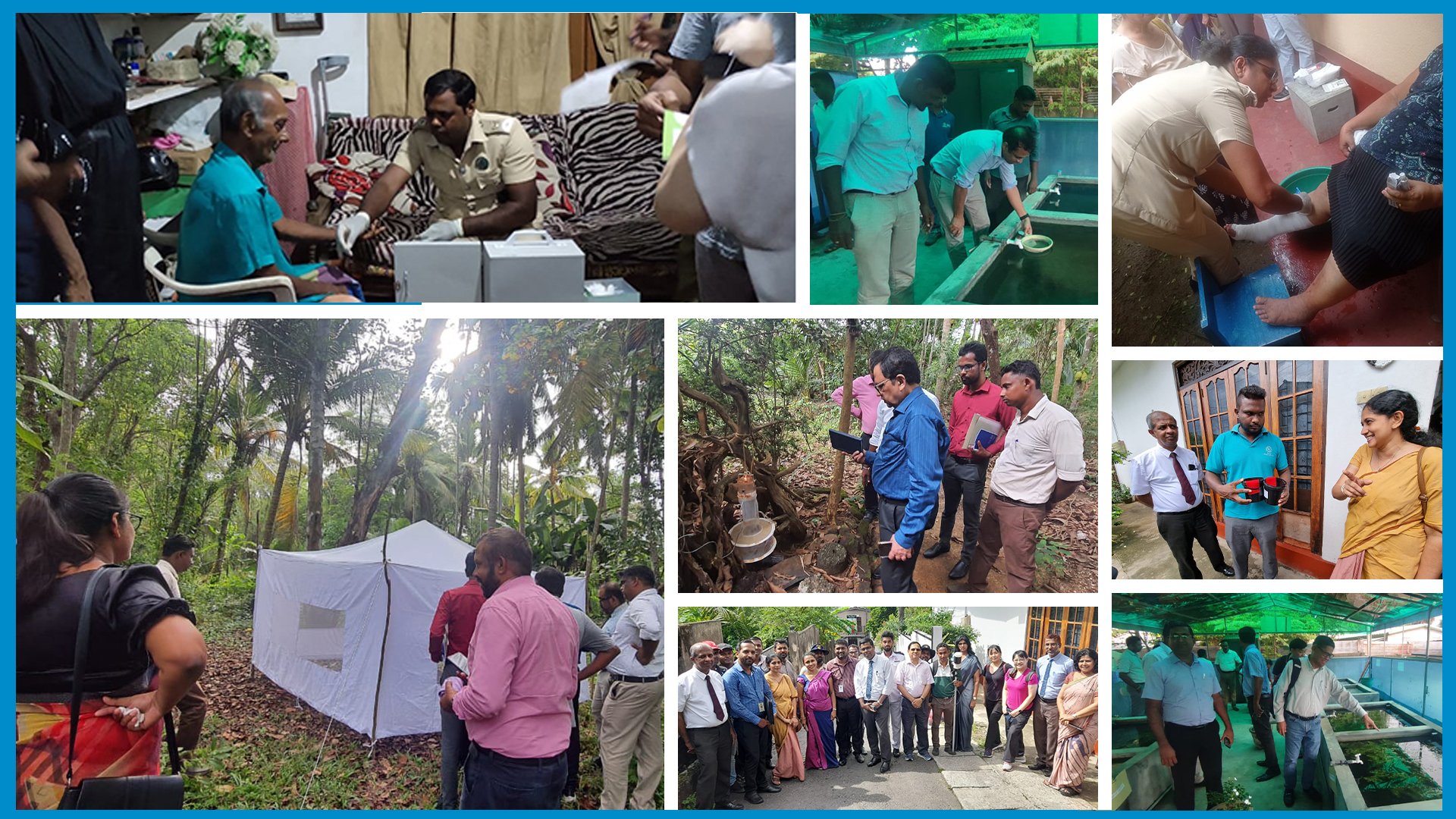
Vector Borne Disease field visits
In 2025, as part of national dengue prevention and control efforts, National Dengue Reviews were supported to evaluate program performance, identify operational and technical gaps, and guide evidence-based improvements. Capacity-building initiatives, such as training programs for medical and nursing officers on dengue case management, have been implemented to further reduce dengue-related illness and death. In response to growing climate-related risks, vector control activities have been intensified in flood-affected districts, focusing on source reduction, larval control, and targeted fogging. Reviews of dengue deaths have also been carried out to analyze causes and contributing factors, leading to improvements in clinical care, referral systems, and case management. To boost operational capacity, essential procurements were completed, including fogging machines, ultrasound scanners for hospitals, photocopy machines, and conference facilities. Key technical documents such as the National Strategic Plan for Dengue, the Entomological Guide, and the Adult Dengue Treatment Guide were published and distributed to support standardized nationwide implementation.
Leprosy elimination efforts have been further strengthened through enhanced surveillance, preventive interventions, and strategic planning. An Adverse Drug Reaction (ADR) survey assessed the safety of multidrug therapy, supported by the procurement of necessary laboratory equipment. Sri Lanka also began introducing Single Dose Rifampicin (SDR) as post-exposure prophylaxis for contacts of leprosy patients, with relevant protocols and standard operating procedures developed and a pilot program planned in three selected districts. Strategic and operational guidance was improved through the creation of a national leprosy elimination roadmap, alongside training for district teams at both national and subnational levels. These initiatives supported the development of the National Strategic Plan for Leprosy 2026–2030. In parallel, a National Guideline on the Management and Control of Leprosy was developed to standardize diagnosis, treatment, follow-up, and prevention. A National Leprosy Conference, organized with the Sasakawa Health Fund, created a platform for knowledge sharing and policy dialogue, and the visit of Mr. Sasakawa to Sri Lanka further strengthened international collaboration and advocacy.
/countries/sri-lanka/photo-2.jpg?sfvrsn=4103e26d_3 "Dr Sasakawa Visit 4")
Mr Sasakaw`s field visit in Rathmalana Sri Lanka
Additionally, an external review of the national rabies program was conducted to assess progress, identify challenges, and provide strategic recommendations for improving rabies prevention, surveillance, and control.
/countries/sri-lanka/world-ntd-day-2026-2.jpg?sfvrsn=72d9f41b_3 "World NTD Day 2026-2") | /countries/sri-lanka/world-ntd-day-2026-1.jpg?sfvrsn=f294167d_2 "World NTD Day 2026-1") |
Rabies review field visits in Galle Sri Lanka
WHO has also supported the National Anti-Filariasis Campaign publication of the National Strategic Plan for Lymphatic Filariasis 2023–2027 and capacity-building initiatives for leishmaniasis control have also been implemented, targeting frontline health workers in high-burden districts.
Looking Ahead
As Sri Lanka commemorates World NTD Day 2026, the country’s progress underscores the significance of sustained investment, multisectoral collaboration, and strong partnerships. Continued focus on integrated, people-centered approaches, climate-sensitive vector control, digital surveillance, and equity-focused service delivery will be critical to reaching national targets and supporting the global NTD Road Map 2021–2030.
WHO Sri Lanka remains dedicated to supporting the nation in strengthening preparedness, surveillance, and response to neglected tropical diseases, ensuring that no one is left behind in the pursuit of a future free from NTDs.
“On World Neglected Tropical Diseases Day, let us re-energize the fight against NTDs by embracing innovation, strengthening cross-sector collaboration, supporting community health workers, and actively engaging the communities we serve.” Dr Rajesh Pandav, WHO representative to Sri Lanka.