
COVID-19 vaccine delivery toolkit
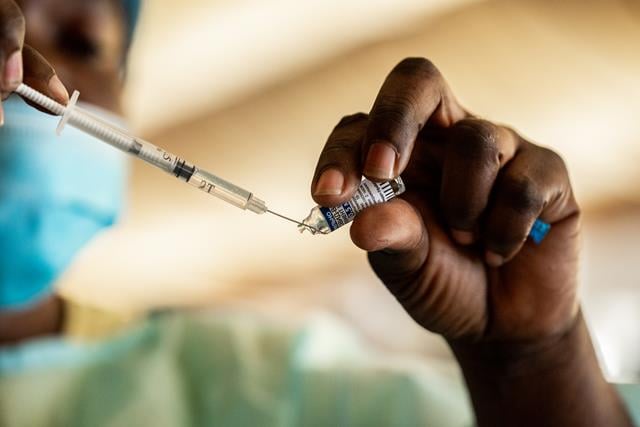
Teresa Yeboah receives the AstraZeneca/Oxford COVID-19 vaccine at Accra's Ridge Hospital, as Ghana rolls out its national COVID-19 vaccination campaign. Health workers, seniors and people with underlying conditions are prioritized for vaccination.
These tools were developed in the context of the acute phase of the COVID-19 pandemic to support countries in the rapid planning, introduction, deployment and monitoring of COVID-19 vaccines in line with the WHO guidance on Developing a National Deployment and Vaccination Plan for COVID-19 vaccines.
They were designed to provide practical guidance and operational resources for immunization programmes, health workers, partners and other stakeholders responding to the unprecedented challenges of vaccine rollout during the pandemic.
While some resources may no longer reflect the latest recommendations or operational context, the toolkit remains available as a reference to support learning, documentation, and implementation of COVID-19 vaccination.
Developing and submitting a National Deployment and Vaccination Plan (NDVP)
A National Deployment and Vaccination Plan is an operational plan to implement and monitor COVID-19 vaccination rollout in a country.
- The Vaccine Introduction Readiness Assessment Tool supports countries to assess readiness
and prioritize actions prior to COVID-19 vaccine introduction.
- The WHO-UNICEF Guidance on developing a national deployment and vaccination plan (NDVP) for COVID-19 vaccines supports countries to develop their national strategies. Guidance on operational microplanning for COVID-19 vaccination is a companion document to the Guidance on developing a national deployment and vaccination plan.
- This training on Orientation to NDVP for COVID-19 vaccines helps national and sub-national focal points in countries to develop their NDVP and prepare for COVID-19 vaccine introduction.
- The role of community health workers in COVID-19 vaccination: implementation support guide supports national governments in developing their national deployment and vaccination plans for COVID-19 vaccines by outlining the roles, needs and opportunities for community health workers to contribute.
- The 92 COVAX Facility Advance Market Commitment (AMC) countries must (and all other countries are welcome to) submit their COVID-19 National Deployment and Vaccination Plans (NDVPs) to be allocated vaccines through the COVAX Facility. The NDVP submission and review process document helps countries to prepare and submit their NDVP to the COVID-19 Partners Platform . This resource should be used in conjunction with the National Deployment and Vaccination Plan for COVID-19 vaccines (NDVP): Standard review. NDVPs will be reviewed by Regional Review Committees on a rolling basis to inform their recommendations on the allocation of vaccines by COVAX.
Microplanning
Countries face challenges with erratic vaccine supplies, use of multiple vaccine products with different characteristics, and the size of populations and their diversity. Operational guidance and information is available to support planners and immunization programme managers at the national and sub-national levels on microplanning for COVID-19 vaccination implementation.
- Guidance on operational microplanning for COVID-19 vaccination is a companion document to the Guidance on developing a national deployment and vaccination plan. It provides a framework for countries to develop their national strategies.
Integration of COVID-19 vaccination into immunization programmes and primary health care
This document lays out key programmatic considerations essential for moving from mass campaigns for COVID-19 vaccination to integrating COVID-19 vaccination into immunization programmes, PHC and other relevant health services for 2022 and beyond. The ultimate aim is to fully explore potential areas for the integration of different components of immunization programmes, PHC, and the health system. Given the evolving epidemiological nature of the COVID-19 pandemic, this is a living document and will be updated to reflect the changing context including as policies for COVID-19 vaccinations over the longer term are formulated. Finally, the document is not intended to outline a prescriptive approach but rather to lay out the considerations and options for countries to consider and apply based on their needs and country context.
English | French | Spanish | Portuguese
Country experiences with COVID-19 vaccination: Mainstreaming & integration with immunization programme services and PHC highlights country examples of good practices and innovation to mainstream/integrate COVID-19 vaccination in the main critical areas of vaccination
Regulatory
WHO Prequalification aims to ensure medicines, vaccines and other health products for supply to low-income countries are quality-assured, safe, effective and accessible to all populations.
The WHO Emergency Use Listing Procedure (EUL) is a risk-based procedure for assessing and listing unlicensed vaccines, therapeutics and in vitro diagnostics with the ultimate aim of expediting the availability of these products to people affected
by a public health emergency.
For a vaccine to be procured through COVAX, it must be listed for emergency use by WHO through the EUL. EUL decisions and documents can also serve as a reference point for countries in their own regulatory decisions.
- Information on COVID-19 vaccines, targeted at Regulatory Agencies: vaccines eligible for WHO prequalification, vaccines under assessment, Status of COVID-19 Vaccines within WHO EUL/PQ evaluation process, WHO List of Prequalified Vaccines, procedures and fees, post-prequalification procedures, prequalification reports, guidance documents, alternative evaluation pathways, and complaints handling.
Considerations to inform country decision making
- The Global Compendium of Country Knowledge on COVID-19 Vaccination aims at offering an organized information space that: Facilitates countries, development partners, NGOs and entities supporting vaccine rollout, access to other country’s documented successes and challenges of their COVID-19 vaccination programmes; this would potentially inform about emerging issues in real-time and thus open a pathway for immediate solutions.
- Country experiences with COVID-19 vaccination: Mainstreaming & integration with immunization programme services and PHC highlights country examples of good practices and innovation to mainstream/integrate COVID-19 vaccination in the main critical areas of vaccination.
- The Learning Collective Initiative in Covid-19 Vaccine Delivery Partnership is a series that aims to collect and share key learnings, best practices and challenges in planning and implementing COVID-19 vaccination uptake.Slides and recordings from past sessions as well as registration links for future sessions are available here .
- Slide set summarizing the WHO latest recommendations on COVID-19 vaccines and considerations for current and future COVID-19 vaccination. The objective is to help orient the Ministry of Health (MoH) and National Immunization Advisory Committee Group (NITAG) in their COVID-19 vaccine strategic decisions. The information contained in this version 5 of the slide set is current as of 19 December 2023.
Infection Prevention and Control for COVID-19 vaccination
- The Infection prevention and control aide memoire is for policy makers, immunization programme managers, infection prevention and control (IPC) focal points at national, sub-national, and facility level, as well as for health workers involved in COVID-19 vaccination delivery. This document summarizes the key IPC principles to consider and the precautions to take for safely delivering COVID-19 vaccines.
- Training on infection prevention and control
Indemnification and liability
- The COVAX No-Fault Compensation Program webpage brings more information on NFC for Advance Market Commitment (AMC) Eligible Economies . The Program provides fair, no-fault, lump sum compensation to eligible individuals who suffer certain serious adverse events after receiving vaccines distributed through the COVAX Facility until 30 June 2022.
Costing, funding and budgeting
- The COVID-19 Vaccine Introduction and deployment Costing tool (CVIC tool) supports credible COVID-19 vaccination costing to facilitate a dialogue with stakeholders while maintaining sensitivity to protecting essential health services.
- What is the CVIC tool? This video, available in English, French and Spanish, shows the importance of COVID-19 vaccine costing and the role of the COVID-19 Vaccine Introduction and deployment Costing tool (CVIC tool).
- Training on how to use the CVIC tool is available in English and French.
- The OpenWHO course CVIC tool: using the COVID-19 Vaccine Introduction and deployment Costing Tool targets national programme managers and personnel who have been involved in the costing, budgeting or financing processes of COVID-19 vaccine delivery in a country.
- COVID-19 vaccination costing Q&A provides a basic introduction on the importance of a good costing exercise for COVID-19 vaccine roll-out, how it can be done, and how to seek technical assistance.
- WHO Costing, Budgeting, Financing and Delivery of COVID-19 Vaccines webinar series align with countries’ immediate and medium-term needs. Session materials are also available online.
- The costs of delivering COVID-19 vaccine in 92 AMC countries report presents broad estimates of the costs of delivering COVID-19 vaccines to approximately 20% of the population in the 92 Advance Market Commitment (AMC) countries.
- COVID-19 vaccination financing and budgeting Q&A provides a basic introduction to the possible financing and budgeting arrangements around the COVID-19 vaccination roll-out.
Supply, logistics and waste management
- How to verify the expiration date of Pfizer-BioNTech COVID-19 Vaccine, Bivalent (Original and Omicron BA.4/BA.5) based on the manufacturing date printed on the primary and secondary packaging label.
- COVID-19 vaccination: Supply and logistics guidance helps national and subnational supply and logistics focal points to prepare and strengthen their supply chain strategies to receive, store, distribute and manage the COVID-19 vaccines and their ancillary products, in line with their national deployment and vaccination plan (NDVP).
- WHO Expanded Programme on Immunization Logistics Forecasting Tool explains how to forecast the needs for vaccines, equipment for safe vaccination, as well as cold chain and ambient storage capacities for national immunization programmes.
- Ultra-low temperature (ULT) storage and transport for vaccines Some of the COVID-19 vaccines may need to be kept at ultra-low temperatures (ULTs) to maintain their potency. This resource provides immunization programme managers and cold chain managers with an overview of the options to overcome the challenges of maintaining the vaccine in ultra-low temperatures during storage and transport.
- Operational guidance on establishing an ultra-cold chain system in support of the Pfizer-BioNTech COVID-19 vaccine rollout is focused on establishing and managing an ultracold chain (UCC) system. It provides practical guidance to support countries in planning and selecting the appropriate UCC system design and equipment based on their local context. It outlines the considerations to ensure the UCC equipment will remain functional and utilized even after the Pfizer-BioNTech COVID-19 Vaccine supply has been fully utilized.
- Acceptance of available traditional vaccine supply with reduced shelf-life advocates for countries to consider acceptance of traditional vaccines with reduced shelf life and guide decision-making tailored to the specific situation at hand, referencing already existing WHO publications.
- Guidance on utilization of COVID-19 vaccines before the date of expiry help countries ensure that all COVID-19 vaccine doses are optimally utilized, and wastage is minimized.
- Injection safety in the context of coronavirus disease (COVID-19) vaccination policy brief confirms WHO guidance and policy on injection safety in the context of the extraordinary increase in global injections resulting from COVID-19 immunization campaigns. It also calls attention to information on specialized syringes for COVID-19 vaccines and broad short-term and long-term solutions to address and alleviate supply shortages related to vaccine products with non-standard dose volumes.
- Guidance on safe and effective management and disposal of wastes generated by COVID-19 vaccination activities at the facility level.
- Guidance on how to manage and safely dispose of vaccination waste at health facility level (applicable for non-live vaccines, including COVID-19 vaccines): Poster format
- How to verify the expiration date for Pfizer-BioNTech COVID-19 Vaccine paediatric formulation using the QR code? Job aid on how to verify the expiration date for Pfizer-BioNTech COVID-19 Vaccine paediatric formulation using the QR code found on the secondary packaging label.
- Training on handling, storing and transporting Pfizer-BioNTech COVID-19 mRNA Vaccine COMIRNATY® (Tozinameran). Training modules on the handling, storing and managing the supply of Pfizer BioNtech COVID-19 vaccine. It is recommended to select the appropriate slides/training modules relevant to the profile of your participants.
Human resources and training
- The COVID-19 vaccination training for health workers provides key information and job aides for vaccinators on how to safely and efficiently administer vaccines.
- COVID-19 vaccine simulation exercises help countries to prepare for strategies, communications, supply and logistics, vaccine safety and regulatory aspects of COVID-19 vaccination.
- Training on how to use COVID-19 vaccine simulation exercises
- Global Capacity Webinars provide helpful information on key aspects of COVID-19 vaccination for national/subnational focal points and health workers.
- The COVID-19 vaccine checklist is for frontline health workers planning a COVID-19 vaccination session. This checklist can help them to prepare and complete a COVID-19 vaccination session at a fixed post or outreach session.
- The Health Worker Communication for COVID-19 Vaccination Flow Diagram supports health workers by outlining key steps and messages, including for pregnant and lactating women, to communicate during a COVID-19 vaccination session.
- Why are there extra doses of vaccine in the vaccine vial? This job aid explains extra doses of vaccine in multi-dose vials and provides guidance for their use.
- Supportive supervision for COVID-19 vaccination is intended for supervisors who are supporting staff conducting COVID-19 vaccination. Use this checklist to prepare for and conduct supervisory visits, either on-site or remotely.
- How to manage COVID-19 vaccines without VVM at vaccination service points? explains how WHO EUL COVID-19 vaccines without a vaccine vial monitor (VVM) should be handled at the vaccination site, to ensure that safe and potent vaccines are administered.
Vaccine-specific resources
What you need to know:
- The Pfizer BioNTech (BNT162b2) COVID-19 vaccine
- The Oxford/AstraZeneca (ChAdOx1-S [recombinant] vaccine) COVID-19 vaccine
- The Janssen Ad26.COV2.S COVID-19 vaccine
- The Moderna COVID-19 (mRNA-1273) vaccine
- The Sinovac-CoronaVac COVID-19 vaccine
- The Sinopharm COVID-19 vaccine
- The CanSino Biologics Ad5-nCoV-S [recombinant] COVID-19 vaccine
- The Novavax COVID-19 vaccine
Generating acceptance and demand for COVID-19 vaccines
- These tools were designed to respond to these challenges and support planning and implementation for COVID-19 vaccination. They offer practical guidance on a range of areas – from planning to data gathering and evaluation, to specific strategies for community engagement and managing rumours and misinformation.
- Considerations for integrating COVID-19 vaccination into immunization programmes and primary health care for 2022 and beyond
- Increasing COVID-19 vaccination uptake (English and French version available).
Vaccine safety
- COVID-19 vaccines: safety surveillance manual highlights the importance for countries to include preparedness plans for COVID-19 vaccine safety and helps them to develop this plan in the NDVP, building on WHO guidance.
- The recognizing anaphylaxis training video provides a brief (4 minute) overview on how to recognize anaphylaxis vs. an immunization stress-related response.
- The identifying and managing anaphylaxis training video provides a brief overview on how to manage anaphylaxis.
- Vaccine safety poster for health workers on how to monitor and report COVID-19 vaccine, side effects
- The Adverse Events Following Immunization (AEFI) page comprises all AEFI resources including aide-mémoires, worksheet, updated AEFI manual as well as the pre-published document on anaphylaxis.
- Guidance for clinical case management of thrombosis with thrombocytopenia syndrome (TTS) following vaccination to prevent coronavirus disease (COVID-19) aims to increase awareness about TTS in the context of COVID-19 vaccination and help healthcare providers in the assessment and management of potential TTS case.
Data and monitoring
- The Monitoring COVID-19 Vaccination guidance provides considerations for: minimum and optional data to collect as vaccines are being rolled out and delivered; key performance indicators and the anticipated use of these – to measure the performance of key components of the immunization system and to take corrective action when needed; and the use of information systems to collect, store, analyze and disseminate any relevant information.
- COVID-19 vaccination data is available on the WHO Coronavirus (COVID-19) Dashboard. These data are viewed by selecting “Vaccination” from the dropdown panel on the left-hand side of the map. Currently, the dashboard incorporates information useful to track global vaccine rollout, including total vaccination doses administered, persons vaccinated with at least one dose, and start date of vaccinations, by country, territory and area.
Evaluation of COVID-19 vaccine introduction
Post introduction evaluation
Following new vaccine introduction into a routine immunization programme, the purpose of a post-introduction vaccine evaluation (PIE) is to evaluate the impact of the vaccine introduction on the country’s immunization programme and to rapidly identify problems needing correction as vaccination expands in country.
After COVID-19 vaccine introduction, in the mid- to long-term phase (between 6–18 months after introduction), a classic or full COVID-19 vaccine PIE (cPIE) is recommended. For countries interested in implementing the classic cPIE, please refer to the COVID-19 vaccine post-introduction evaluation (cPIE) guide: interim guidance, 25 August 2021.
Mini cPIE
The mini COVID-19 Post-Introduction Evaluation (mini-cPIE), also called the COVID-19 Vaccination Intra-Action Review (IAR), is a set of tools available to countries to review the early phase(s) of the roll-out of COVID-19 vaccine implementation. The mini-cPIE is a country-led facilitated discussion that aims to identify vaccine delivery challenges needing immediate corrective action and best practices for continual improvement and collective learning. The areas covered follow the National Deployment and Vaccination Plan for COVID-19 Vaccines (NDVP).
The mini-cPIE working documents (trigger question database, note-taking template, and report template) are available here:
- Country COVID-19 intra-action review (IAR): Final report template Pillar 10, COVID-19 vaccination
- Country COVID-19 intra-action review (IAR): trigger question database
- Country COVID-19 intra-action review (IAR): Note-taking template pillar 10, COVID-19 vaccination
Countries are encouraged to begin using these working drafts for planning and implementation as needed. Given the evolving situation with the COVID-19 vaccine rollout, the trigger questions may be updated frequently based on feedback received. The mini-cPIE is recommended 2 to 6 months following COVID-19 vaccine introduction. Countries may adapt the questions as needed for their context. This slide set provides an overview of how to conduct a mini COVID-19 Post Introduction Evaluation.
Watch the training recording: Mini-cPIE (COVID-19 Vaccination IAR) – What is it and how to conduct one?
Vaccine effectiveness guidance
Vaccine effectiveness and impact studies are needed to understand how the vaccine works in the real world. Guidance on how to conduct such studies, sample protocols, and other resources can be found here.
Additional resources
- PAHO has also developed resources for the Americas region to help governments to prepare the introduction and successful roll-out of COVID-19 vaccines, as well as resources for the general public to answer questions related to COVID-19 candidate vaccines.
- COVID-19 immunization in refugees and migrants: principles and key considerations: interim guidance
- Frequently asked questions - COVID-19 vaccines and breastfeeding based on WHO SAGE interim recommendations provides answers to frequently asked questions (FAQs) about COVID-19 vaccination and breastfeeding. It is intended to assist health workers and the public, including mothers who are breastfeeding or expressing milk.
- Updated WHO Guidance on COVID-19 vaccination for pregnant and lactating women: This document provides background on evidence, WHO interim recommendations, tools and resources about COVID-19 vaccination during pregnancy and lactation.
- Safe Ramadan practices in the context of COVID-19 - This guidance focuses on SARS-CoV-2 transmission, public health and social measures, vaccination, and the use of masks in the context of Ramadan.
- Disability considerations for COVID-19 vaccination presents considerations and actions for the following stakeholders to ensure equity in access to vaccination against COVID‑19 for persons with disabilities.
- Joint note on means to protect health care from acts of violence in the COVID-19 vaccination rollout in fragile, conflict-affected and vulnerable settings outlines specific actions for consideration at operational level to ensure the provision of COVID-19 vaccines, unhindered by any acts of violence or obstruction.
- The guidance note and checklist for tackling gender-related barriers to equitable COVID-19 vaccine deployment provides a set of practical actions for countries to implement and ensure gender equality and equity in the deployment of COVID-19 vaccines.
Q&As
Related