
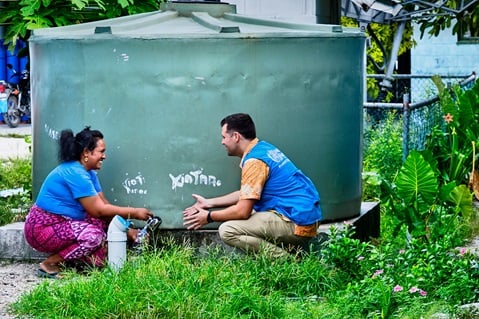
In an operating theatre at Vaiola Hospital in Tonga, surgeons from the Philippines and Tonga work side by side to remove a patient’s submandibular gland. In Chuuk State in the Federated States of Micronesia, Filipino and Micronesian nurses manage the complications of diabetes together. In a simulation laboratory at the University of the Philippines College of Medicine in Manila, government representatives from Niue observe how lifelike models of babies are used to train medical personnel on safe delivery.
 |  |
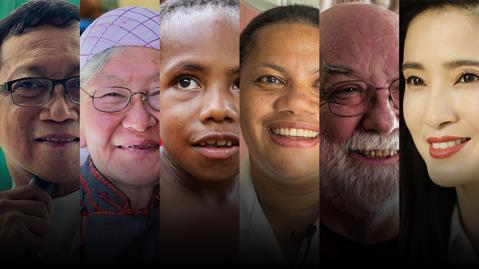
These are the faces of the Philippine–Pacific Health Initiative (PhilPac). The Philippines and Pacific island countries are stepping up cooperation as they work in partnership to strengthen health systems with a focus on the health workforce. Together they will tackle current and future challenges, explore technological innovations, and make the most of opportunities to find ways to better serve their populations, including the most vulnerable.
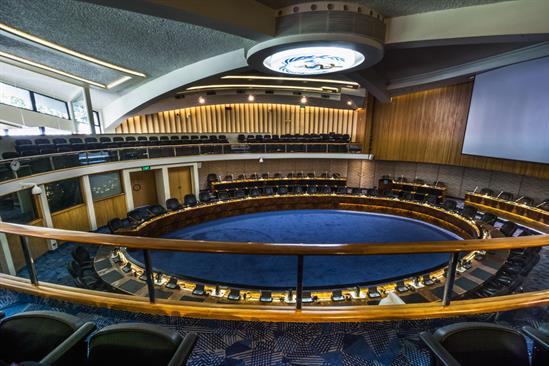
From 26 to 28 August 2026 in Manila, ministers of health from the Philippines and Pacific island countries convened for the Second Ministerial Meeting of PhilPac under the theme “Health Systems, Energy Uncertainty and Climate Change – Implications for the Health Workforce”.
“I view our work through a pragmatic lens. Policy fulfils its true purpose when it changes the daily reality of a patient waiting in a health facility or needing medical care in an outer island community,” said Philippine Health Secretary Dr Edwin Mercado. “PhilPac has a large potential to deliver this and – consistent with the directive of our President, Ferdinand R. Marcos, Jr. – I look forward to strengthening our relationship with our brothers and sisters in the Pacific towards achieving the goal of ‘no island left behind’.”
 |  |
Philippine Health Secretary Dr Edwin Mercado, WHO Regional Director Dr Saia Ma'u Piukala, Pacific Ministers and high-level officials at the Second Ministerial Meeting of the Philippine–Pacific Health Initiative held in Manila, Philippines. © HaloHalo Events / Jeoben Villaruel
A shortage felt island by island
The World Health Organization (WHO) projects a global shortfall of 11 million health workers by 2030, with the Western Pacific among the hardest-hit regions. The Philippines and Pacific island countries and areas face similar workforce challenges: too few health workers, uneven distribution of those who are available, and the loss of skilled staff to migration. Remote island communities often struggle to reach essential care. And across the Pacific, a shortage of specialists limits access to a range of services. Pacific island countries account for up to 7% of the Philippines’ medical tourism.
Furthermore, rising energy costs are making it more expensive to run health facilities and reach communities spread across the Region’s islands. Climate change compounds the problem, threatening health infrastructure and disrupting water and power supplies, transport and supply chains. More than 60% of health facilities in 14 Pacific island countries sit within 500 metres of the coast, leaving them exposed to flooding and other weather-related hazards.
Emphasizing the need for regional cooperation, President Marcos said, “Our health systems are being tested by forces that do not respect borders. The Philippines and Pacific island countries must build a resilient health corridor – one that strengthens preparedness, deepens cooperation, and better equips us to meet the health challenges ahead.”
A new phase of partnership
The meeting was attended by delegations from the Philippines and 10 Pacific island countries and areas, and marks a new phase for PhilPac, which was launched two years ago. The partnership is now moving from stand-alone activities towards a more structured, lasting model of cooperation.
“Countries identify the priorities. Countries lead. WHO helps connect those priorities with the expertise, institutions and partners that can respond. This approach ensures that solutions are designed with, and for, the people they serve,” explained Dr Saia Ma’u Piukala, WHO Regional Director for the Western Pacific.
Priority areas include building health workforce skills in medical education, mental health, nursing and oral health. PhilPac will also work to improve primary health care, maternal and child health and hypertension control; it will strengthen public health capacity in tobacco control and the use of AI.
 Honourable Marcus Samo briefs the Philippine medical team in Chuuk State, Federated States of Micronesia. © WHO
“This is health diplomacy in practice,” said Honourable Marcus Samo, Secretary of the Department of Health and Social Affairs for the Federated States of Micronesia. “It’s an investment in health workforce development and system strengthening, anchored in partnership.”
From missions to institutions
Over the next two years, PhilPac will work to deliver lasting improvements in health workforce capacity and health systems. This includes expanding access to training, specialization and professional development; strengthening workforce planning, data and policy; and building stronger emergency preparedness and response.
Institutional twinning will anchor this work: Papua New Guinea with the University of the Philippines College of Medicine, the Federated States of Micronesia with Mapúa University, and Solomon Islands National University with Silliman University. Partnerships will also be established between provinces in the Philippines and Pacific countries, such as Iloilo with the Federated States of Micronesia and Aklan with Cook Islands.
 |  |
© Bataan General Hospital and Medical Center & WHO / Francis Cube
Online learning will be a defining feature of PhilPac’s next phase. Sending Pacific health workers off-island for training is a strain on countries that already have thin staffing, so partners agreed to bring training closer to home. Through the Pacific Open Learning Health Net (POLHN), a set of online courses will be developed that health workers can complete without leaving their countries, followed by in-country coaching and mentoring. Courses will cover emergency preparedness and response, digital health and AI, mental health, antimicrobial resistance, noncommunicable diseases, and maternal and child health, among others. Through distance learning, PhilPac aims to reach health workers on outer and remote islands, where travel is hardest.
“We are one, united by the Pacific Ocean,” said Fiji’s Minister for Information, Environment and Climate Change, Honourable Lynda Diseru Tabuya. “We share the same experiences and challenges, but also a shared commitment and hope: that our health systems will be strengthened, and our Pacific protected and resilient in the face of climate change.”
 © HaloHalo Events / Jeoben Villaruel
About PhilPac
Established in 2024, the Philippine–Pacific Health Initiative (PhilPac) is a networking platform linking the Philippines and Pacific island countries and areas to strengthen health workforce capacity, resilience and long-term sustainability. Initiated by the Philippines and facilitated by WHO, the Initiative is grounded in South–South and regional cooperation, mutual learning, country ownership and solidarity. It responds to persistent health worker shortages and distribution challenges across Pacific island settings.